


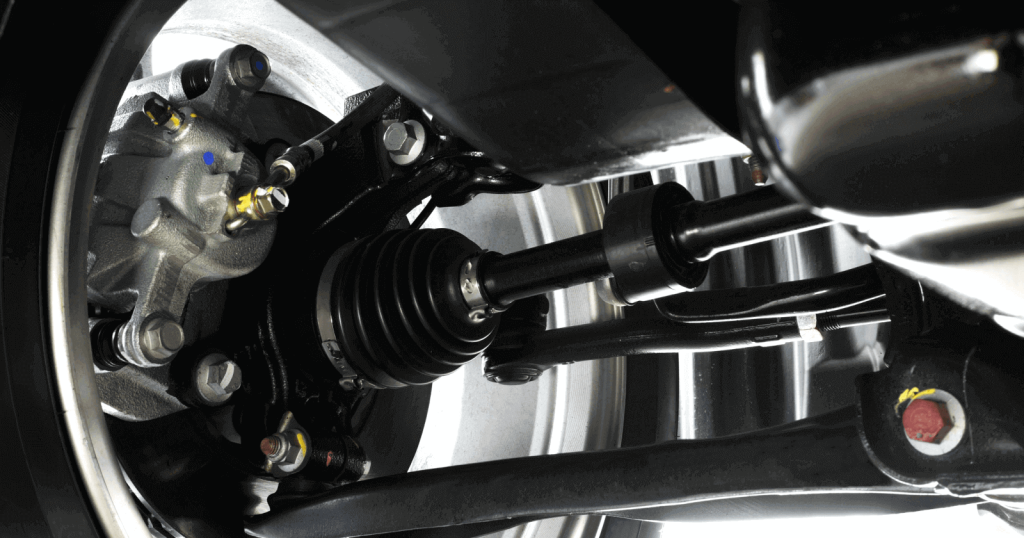
In car terminology, an axle is a crucial component that acts as the central shaft connecting and supporting the wheels. It transfers power from the engine and transmission to the wheels, enabling the vehicle to move. Axles also bear the weight of the car and allow for up and down movement of the wheels.
Key Functions of a Car Axle:
Power Transmission:
Axles are responsible for transmitting power from the engine to the wheels, allowing the vehicle to accelerate and decelerate.
Wheel Support:
They bear the weight of the car, including passengers and cargo, and support the wheels.
Wheel Rotation:
Axles allow the wheels to rotate, enabling the car to move.
Suspension Connection:
Axles connect the wheels to the suspension system, allowing for up and down movement.
Types of Axles:
Solid Axles:
Found in many trucks and SUVs, solid axles connect both wheels on a specific axle, providing a rigid connection.
Independent Axles:
Found in most cars, independent axles allow each wheel to move independently, providing a smoother ride.
Axle Components:
Shaft: The main rod or shaft that connects the wheels.
Bearings: Reduce friction between rotating parts.
Hubs: Connect the axle to the wheel.
Half-shafts or Drive shafts: In front-wheel drive vehicles, these connect the transmission to the wheels.
Driveshaft: In rear-wheel drive vehicles, the driveshaft connects the transmission to the differential, which is then connected to the axle.